
QEEG (Brain Mapping): An Adjunct in Understanding Brain Function
QEEG (quantitative electroencephalography), also known as brain mapping, is a tool that measures the brain’s electrical activity and compares it, statistically, against normative databases. At BNC it is used as an adjunct – an additional source of information alongside clinical assessment – in understanding the neurophysiology behind conditions including ADHD, post-concussion syndrome, and anxiety and mood difficulties. It is not a stand-alone diagnostic test, and it is never used to replace clinical judgement.
What Is a QEEG?
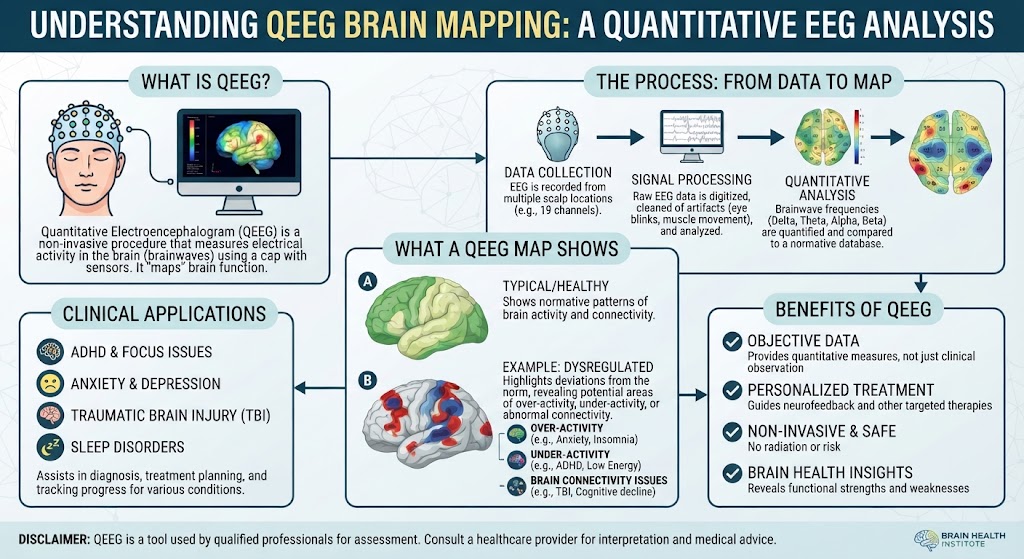
A QEEG uses sensors placed on the scalp to record the brain’s electrical activity, in the same way a standard EEG (electroencephalogram) does. The recording is then processed statistically and compared against normative databases, producing a “map” that can highlight areas where brainwave activity differs from what would typically be expected. This can sometimes reveal patterns of brain dysfunction that aren’t visible on standard structural imaging such as CT or MRI scans.
How QEEG Findings Are Used at BNC
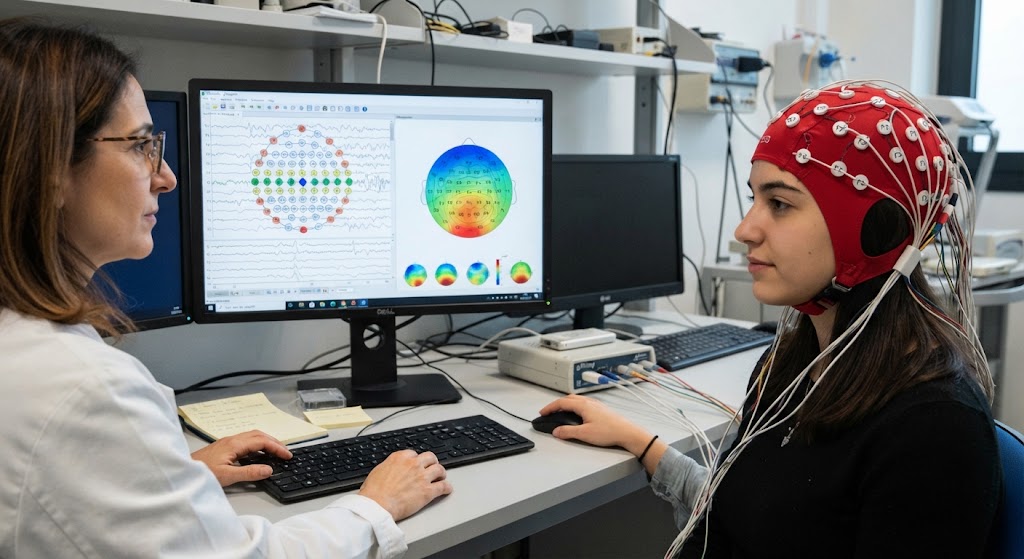 BNC psychologists do not record the EEG or interpret the raw results themselves. Instead, they refer the client to an experienced Clinical Neuroscientist – Dr Jacques Duff – who correlates the QEEG findings, T.O.V.A. (Test of Variables of Attention) results, and the client’s reported symptoms against the research literature. These correlations are presented back to the referring clinician, without a diagnosis or clinical recommendation being made by the neuroscientist.
This distinction matters: it leaves the referring Clinician free to use these adjunct findings, alongside everything else they know about the client, to form their own clinical judgement and recommend a treatment approach. The QEEG and T.O.V.A. results are one input among several, not a substitute for the psychologist’s or psychiatrist's own clinical assessment.
Is QEEG a Diagnostic Test?
No. QEEG is not a stand-alone diagnostic tool. Its findings are informative and can add to the overall clinical picture, but they are always interpreted alongside clinical history, symptom reports, and – where relevant – neuropsychological testing, rather than used on their own to make a diagnosis.
Safety and What to Expect
A QEEG is non-invasive and painless. Small sensors are placed on the scalp to record electrical activity, with the recording session typically lasting around 10 minutes. There is no radiation involved and no risk to the client.
Limitations of QEEG
QEEG findings are not specific to any one condition, and can be influenced by factors such as medication, fatigue, stress, or sleep. Interpreting the results reliably requires specialised training, which is why this is handled by an experienced Clinical Neuroscientist rather than reviewed in isolation. Results should always be considered alongside the broader clinical picture, not read on their own.
Frequently Asked Questions
What is a QEEG (brain map)?+
How can QEEG help with concussion and mental health symptoms?+
Is QEEG used to make a diagnosis?+
Who reads and interprets the QEEG at BNC?+
How can QEEG help guide treatment?+
Is QEEG safe?+
Are there limitations to QEEG?+
Should everyone get a QEEG?+
Updated on: 23/08/2026 by: Dr Jacques Duff – PhD; BA Psych; Grad Dip Applied Psychology; FANSA, Clinical Neuroscientist.
Reviewed on: 23/08/2026 by: Bernard Ferriere – Clinical Psychologist; BA; Grad Dip Applied Psychology; Dip Clinical Hypnosis; MAPS