
Post-Concussion Syndrome Treatment
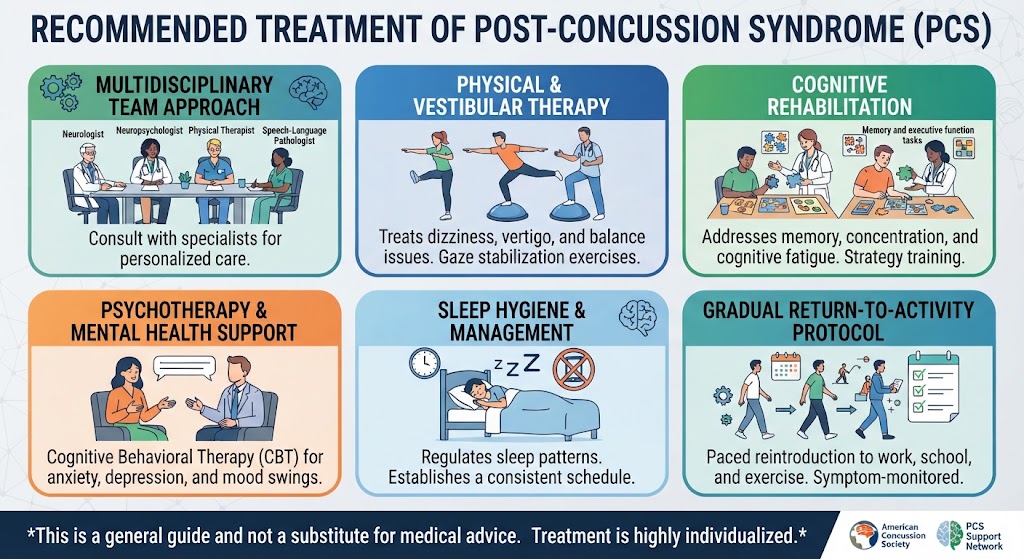
There is no single treatment that resolves post-concussion syndrome for everyone. Instead, care is personalised to the specific symptoms a person is experiencing, and usually draws on several complementary approaches rather than one alone. Medication and generic cognitive rehabilitation programs on their own have limited evidence for restoring cognitive function after concussion, which is why treatment at BNC is built around your specific symptom profile rather than a one-size-fits-all program.
Rest and Activity Management
In the early stages, physical rest, avoiding activities that worsen symptoms, is generally recommended, though prolonged bed rest is not advised. Activity is gradually reintroduced as tolerated. Cognitive rest, such as limiting screen time and mentally demanding tasks in the first days or weeks after injury, is often recommended alongside physical rest, with both gradually increased as symptoms allow.
Symptom-Specific Treatments
Because PCS symptoms vary so widely, treatment is generally matched to what a person is actually experiencing:
- Headaches and sleep difficulties: best discussed with your GP or a specialist, who can advise on appropriate medication or referral
- Mood symptoms: psychological treatments such as cognitive behavioural therapy and counselling can help manage low mood, anxiety and irritability
- Dizziness and balance problems: vestibular therapy can be helpful, often in conjunction with a psychologist supporting cognitive strategies for coping day to day
Lifestyle Adjustments
Alongside targeted treatment, several lifestyle factors support recovery: stress management through mindfulness or relaxation techniques, balanced nutrition and adequate hydration, and – where needed – multidisciplinary care involving neurology, physiotherapy, psychology and nutrition working together.
Why is nutrition important for recovery from concussion ?
Achieving and maintaining optimum nutrient status after concussion is vital for supporting the brain’s metabolic needs, reducing inflammation, repairing neural tissue, and preventing secondary complications. A diet rich in macronutrients, micronutrients, and specific neuro-supportive compounds (like DHA and antioxidants) is recommended to help ensure the most efficient and complete recovery possible. See out page on Nutrient needs Post-concussion.
What Not to Do
Avoid alcohol and recreational drugs while recovering, and avoid activities that carry a risk of a further head injury. Listen to your body rather than pushing through severe symptoms, if a particular activity consistently makes symptoms worse, that’s a signal to ease back rather than push through.
Most people recover within weeks to months of a concussion, though some experience longer-lasting effects requiring the more structured, multimodal approach described above.
Treatment planning begins with a thorough assessment — read more about our Post-Concussion Syndrome Assessment process.
Frequently Asked Questions
Is there a cure for post-concussion syndrome?+
Does medication treat post-concussion syndrome?+
How long does treatment for PCS take?+
Can children and adults both be treated for PCS?+
Updated on: 23/08/2026 by: Dr Jacques Duff – PhD; BA Psych; Grad Dip Applied Psychology; FANSA, Clinical Neuroscientist.
Reviewed on: 23/08/2026 by: Bernard Ferriere – Clinical Psychologist; BA; Grad Dip Applied Psychology; Dip Clinical Hypnosis; MAPS