



ADHD Clinical Guidelines: Best-Practice Treatment in Australia
The Australian Evidence-Based Clinical Practice Guideline for ADHD, developed by the Australian ADHD Professionals Association (AADPA) and endorsed by the National Health and Medical Research Council (NHMRC), sets the national benchmark for identifying, diagnosing, and treating ADHD across the lifespan. It was developed using the GRADE framework, combining the best available research evidence with multidisciplinary clinical expertise and the lived experience of people with ADHD. At BNC, our assessment and treatment approach is directly aligned with this guideline.
What the Guideline Recommends
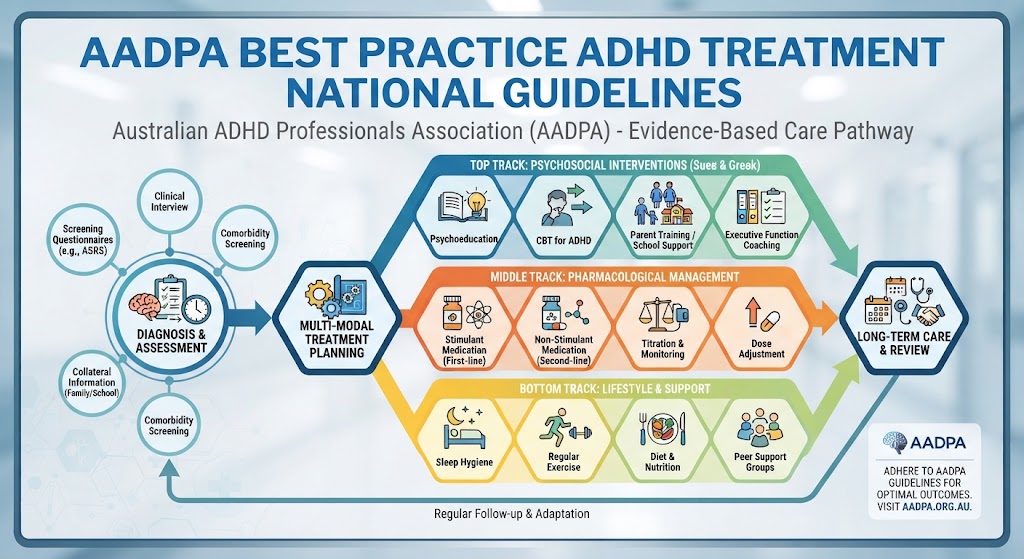
The guideline's central recommendation is that ADHD is best managed with a multimodal approach; combining several evidence-based strategies together, rather than relying on any single treatment in isolation. Best-practice management addresses both the core symptoms of ADHD and the psychosocial difficulties that often come with it, such as anxiety, low self-esteem, and strained relationships at home, school or work.
The Six Components of Multimodal Treatment
 Medication
Stimulant medication is recommended as a first-line intervention, given its strong evidence base for reducing core ADHD symptoms. Non-stimulant options are available for those who don't tolerate stimulants well, or where coexisting conditions such as anxiety or tics make stimulants less suitable. Careful titration and monitoring is essential, especially where anxiety is present, as stimulants can sometimes exacerbate anxiety symptoms or affect sleep. Medication decisions are made by a paediatrician or psychiatrist. BNC's psychologists focus on the non-pharmacological components below and provide liaison and referral where medication is appropriate.
Psychological Intervention
Cognitive behavioural therapy (CBT) supports emotional regulation, addresses comorbid anxiety and oppositional behaviours, and provides practical coping strategies for the stress that often accompanies ADHD. This is one of the areas where BNC's psychologists are most directly involved in ongoing care.
Family Involvement
Parents and family members are engaged in psychoeducation and ongoing support, building a collaborative approach to monitoring symptoms, implementing strategies at home, and managing the stress that a child's ADHD can place on the whole family.
Diet and Nutrition
Where a presentation suggests possible nutritional deficits, low energy, fatigue, or focus issues. a referral for nutritional assessment can help. Dietary interventions focus on balanced macronutrient and micronutrient intake and regular meals, with supplementation only under clinical recommendation and professional supervision.
Lifestyle Modifications
Regular physical activity, consistent sleep routines, and structured daily schedules all support attention and mood stability. School accommodations and environmental modifications round out this side of treatment.
ADHD Coaching
Coaching provides practical, everyday guidance, helping put therapeutic strategies into practice in daily life through organisation, time management and goal-setting support. It complements, rather than replaces, medical and psychological treatment.
Why Multimodal Treatment Works Better Than Medication Alone
Research summarised in the guideline shows that combined pharmacological and non-pharmacological treatment outperforms either approach alone. The two work differently: medication tends to be more effective at reducing the core symptoms of ADHD, while non-pharmacological treatments tend to be more effective at improving day-to-day functional outcomes, schoolwork, relationships, and daily routines. Combining both addresses more of what ADHD actually affects in a person's life.
How BNC Applies These Guidelines
Every assessment and treatment plan at BNC is built around this evidence base. If you haven't yet been assessed, start with our ADHD assessment and diagnosis guide. If you have a diagnosis and want to understand your treatment options in more detail, see our ADHD treatment page.
Updated on 19/08/2026 by: Dr Jacques Duff PhD- BA Psych; Grad Dip Applied Psychology; FANSA, Clinical Neuroscientist.
Reviewed on 19/08/2026 by: Bernard Ferriere- Clinical Psychologist; BA; Grad Dip Applied Psychology; Dip Clinical Hypnosis; MAPS