Post-concussion syndrome
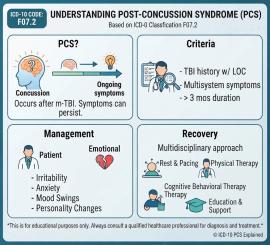
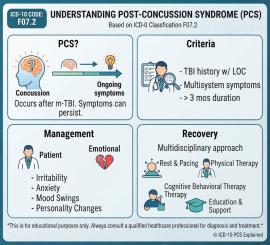
Post-concussion syndrome (PCS) describes a group of symptoms, including attention difficulties, memory problems, mood changes, headaches and fatigue, that can persist for weeks, months or even years after a concussion. BNC provides assessment and therapy for children, adolescents and adults experiencing persistent symptoms after a mild traumatic brain injury leasing to PCS, in clinic in Doncaster or via Zoom telehealth.
Learn More About PCS
- Understanding Post-Concussion Syndrome – what PCS is, common symptoms, and why recovery time varies between individuals
- Assessment of Post-Concussion Syndrome – how PCS is diagnosed, including neuropsychological testing and diagnostic criteria
- Treatment of Post-Concussion Syndrome – symptom-specific treatment, lifestyle support, and multimodal approaches
- QEEG (Brain Mapping) – how QEEG is used as an adjunct tool in understanding brain function, at BNC and beyond concussion
Signs You May Be Experiencing Post-Concussion Syndrome
Most people recover from a concussion within days to weeks. If symptoms are persisting beyond that window, it may be worth arranging an assessment. Signs to look out for include:
- Ongoing headaches, dizziness or fatigue
- Difficulty concentrating or remembering things
- Increased irritability, mood changes or temper outbursts
- Sleep disturbances
- Sensitivity to noise or light
- Changes in personality noticed by family or friends
Assessment and Support at BNC
Our psychologists provide comprehensive assessment for post-concussion syndrome, combining clinical evaluation with referral for neuropsychological testing. Where appropriate, a reserral to a clinical neuroscientist for an adjunct QEEG assessment. A GP referral (Mental Health Treatment Plan or paediatrician referral) may allow you to claim a Medicare rebate for eligible psychology sessions. Following assessment, we provide a detailed report with practical, individualised treatment recommendations.
Frequently Asked Questions
What is post-concussion syndrome?+
Post-concussion syndrome is a set of symptoms – including headaches, dizziness, fatigue, difficulty concentrating, memory problems, irritability and sleep disturbances – that persist for weeks or months after a concussion or mild traumatic brain injury.
How is post-concussion syndrome diagnosed?+
PCS is assessed through a combination of clinical evaluation, history of head injury, and neuropsychological testing. There is no single definitive test. See our Assessment of PCS page for the full process.
How is post-concussion syndrome treated?+
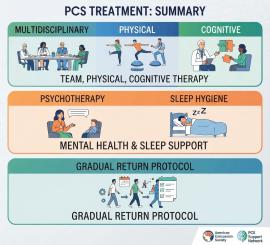
Treatment is personalised to your specific symptoms and usually combines rest and activity management, symptom-specific treatment, and lifestyle support. See our Treatment of PCS page for more detail.
What is QEEG and how does it relate to PCS?+
QEEG (brain mapping) is an adjunct tool that can add to the clinical picture in some cases of PCS, alongside clinical assessment and neuropsychological testing. It is not a stand-alone diagnostic test. See our QEEG page for a full explanation of how this works at BNC.
Does Medicare cover assessment and treatment for PCS?+
With a referral from a GP or paediatrician, eligible clients may be able to claim a Medicare rebate for psychology sessions under a Mental Health Treatment Plan. Contact our clinic for current details on fees and rebates.
Updated on 19/08/2026 by: Dr Jacques Duff PhD- BA Psych; Grad Dip Applied Psychology; FANSA, Clinical Neuroscientist.
Reviewed on 23/08/2026 by: Bernard Ferriere- Clinical Psychologist; BA; Grad Dip Applied Psychology; Dip Clinical Hypnosis; MAPS
When symptoms persist for months, or in some cases years, after a mild traumatic brain injury, a thorough clinical assessment is the first step.
There is no single treatment that resolves post-concussion syndrome for everyone. Instead, care is personalised to the specific symptoms a person is experiencing, and usually draws on several complementary approaches rather than one alone.
Post-concussion syndrome (PCS) describes a set of symptoms – attention difficulties, learning difficulties, impulsivity, mood and anger problems, and often headaches and fatigue, that can persist for weeks, months, or in some cases years after a minor closed head injury (a concussion or mild… more