



ADHD in girls: The Signs That Are Easy to Miss
For decades, ADHD research focused almost exclusively on hyperactive boys. As a result, the condition looks very different from what many people, including GPs and teachers, expect when they think of ADHD. Girls and women with ADHD are routinely missed, misdiagnosed, or told they are simply anxious, perfectionistic, or overwhelmed.(Quinn & Madhoo, Psychiatrist.com; The Lancet Psychiatry)
Did you know? Research consistently shows that girls and women are significantly underdiagnosed with ADHD. Despite ADHD affecting males and females at similar rates, boys are diagnosed at roughly 3 times the rate of girls. Many women do not receive their diagnosis until their 30s, 40s, or later. (The Lancet Psychiatry; Brown University Child and Adolescent Behavior Letter).
How ADHD in Girls Differs from the Typical Presentation
Girls more commonly show the inattentive subtype, which is less disruptive, less visible, and far easier to overlook. (Zambo, Intervention in School and Clinic; Bauermeister et al., Journal of Child Psychology and Psychiatry).
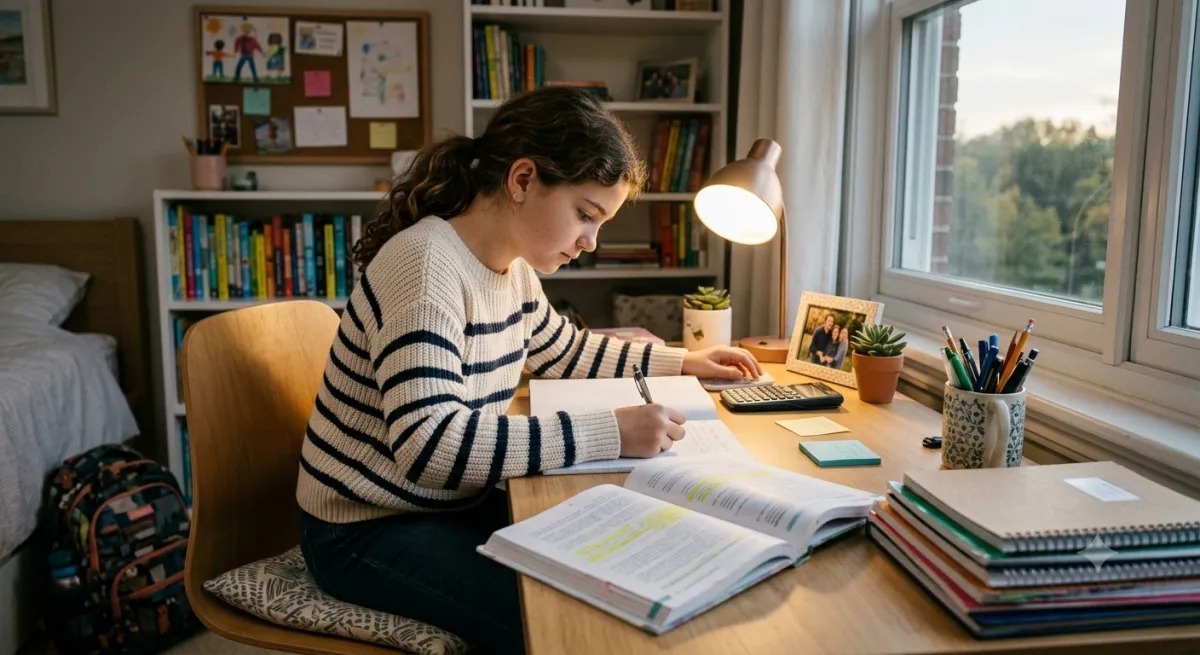
📚 At school
- Daydreaming; appearing "away with the fairies"
- Difficulty sustaining attention in class
- Work is inconsistent — brilliant one day, poor the next
- Disorganised schoolwork, lost assignments
- Takes much longer than peers to complete work
- Teachers describe her as "could do better if she tried"
💬 Social & emotional
- Emotionally intense; big reactions to perceived criticism
- Difficulty maintaining friendships
- Social anxiety; worrying about what others think
- People-pleasing to compensate for social mistakes
- Low self-esteem despite outward competence
- Anxiety, often secondary to ADHD difficulties
(Williams et al., The British Journal of Psychiatry)
Masking: Why Girls Hide Their ADHD
Masking refers to the conscious or unconscious strategies used to hide ADHD symptoms from others. Girls and women are particularly likely to mask because social expectations for behaviour are higher — and the social cost of "failing" is perceived as greater.
Masking strategies include:
- Carefully watching and imitating the behaviour of peers
- Working extremely hard in private to compensate for difficulties
- Appearing calm and organised on the outside while internally being chaotic
- Using humour or charm to deflect from academic or organisational failures
The cost of masking: While masking can allow a girl with ADHD to "pass" in school or social settings, it is exhausting. Many women report complete mental and emotional burnout — often triggered by a major life change like starting university, a new job, or having children — which is frequently when they finally seek and receive a diagnosis. (Martin, The Lancet Psychiatry; Williams et al., The British Journal of Psychiatry).
ADHD in Girls: Common Presentations
- Chronic overwhelm: the feeling that there is always too much to do and no idea where to start
- Disorganisation at home: difficulty keeping on top of household tasks, bills, appointments
- Rejection Sensitive Dysphoria (RSD): intense emotional pain triggered by perceived rejection or criticism, highly characteristic of ADHD
- Imposter syndrome: high-achieving girlswho privately feel they are "faking it"
- Anxiety and depression: often secondary to years of struggling without support or explanation
- ADHD paralysis: being completely unable to start or switch tasks despite knowing they are important
- Exhaustion: the relentless effort of managing symptoms, masking, and holding everything together takes a significant toll
(Quinn & Madhoo, Psychiatrist.com)
Hormones and ADHD: A Frequently Overlooked Factor
Oestrogen plays a direct role in regulating dopamine, the neurotransmitter most closely associated with ADHD. This means ADHD symptoms in women may fluctuate significantly across the menstrual cycle, during pregnancy, and at perimenopause. Many girls and women describe their symptoms worsening dramatically in the lead-up to their period or women during perimenopause, when oestrogen levels fall. (Kooij et al., Frontiers in Global Women's Health; Osianlis et al., Journal of Attention Disorders; Antoniou et al., Materia Socio Medica).
Getting an Assessment for Your Daughter
Signs to look for in school-aged girls:
- Teacher comments about inattention, daydreaming or inconsistent effort
- Bright child who is not performing to her potential
- Significant anxiety about school, social situations or performance
- Emotional outbursts at home after holding it together at school
- Disorganisation that causes daily family conflict (lost items, forgotten assignments)
- Takes 2–3 times longer than siblings to complete homework
(Caputo, UCF Honors Theses; Bauermeister et al., Journal of Child Psychology and Psychiatry)
(Quinn & Madhoo, Psychiatrist.com).
Concerned about ADHD in yourself or your daughter?
BNC provides evidenced informed assessments for girls, adolescents and adult women in Melbourne. Ask your GP for a referral, or contact us directly.
Updated on 22/08/2026 by: Dr Jacques Duff PhD- BA Psych; Grad Dip Applied Psychology; FANSA, Clinical Neuroscientist.
Reviewed on 22/08/2026 by: Bernard Ferriere- Clinical Psychologist; BA; Grad Dip Applied Psychology; Dip Clinical Hypnosis; MAPS