
Telehealth Versus In-Person Psychology: Which Fits?
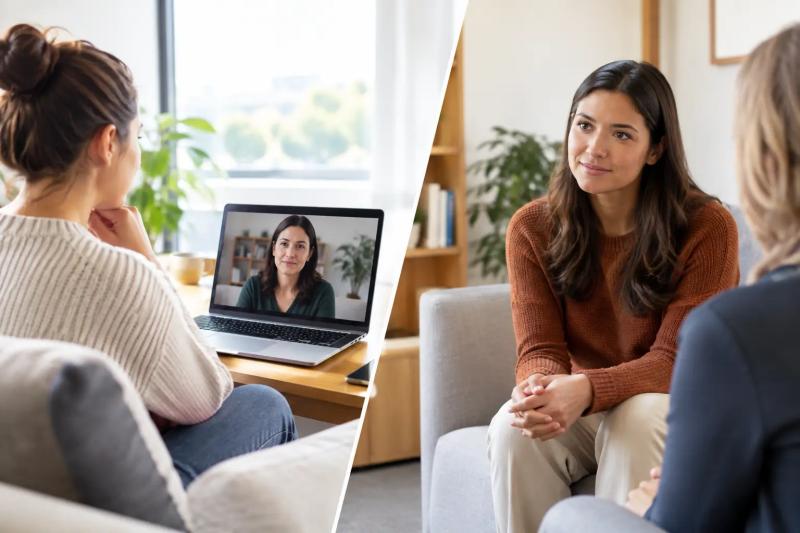
A psychology appointment may need to fit around school hours, work, caring responsibilities or a long trip across Melbourne. In telehealth versus in-person psychology, the most suitable format is usually the one that allows the clinician to complete the required work properly while making attendance realistic for the person or family involved.
For some appointments, Zoom offers a practical way to begin assessment or continue psychological therapy without travel. For others, being in the same room gives the clinician information that is harder to gather on screen, particularly when a child is being assessed or when structured tasks are involved. The choice is not a measure of how serious a concern is. It is a clinical and practical decision that can change across the course of care.
What telehealth psychology involves
Telehealth psychology is an appointment held by secure video, usually with a computer, tablet or mobile. The clinician and client can speak face to face, discuss developmental history, review forms and questionnaires, and plan next steps from different locations.
For an adult arranging an ADHD assessment, an initial telehealth appointment may provide space to discuss lifelong patterns of attention, organisation, impulsivity, emotional regulation and day-to-day functioning. A psychologist can also gather developmental history and ask about school, work, relationships, sleep, mental health and previous supports. If collateral information is needed, this may include reports, school records or input from a parent, partner or another person who knows the client well.
For parents and caregivers, telehealth can make it easier for more than one adult to attend a discussion about a child or adolescent. A parent who works away from home, or a separated parent living elsewhere, may be able to join part of an appointment without adding another trip to the week.
Telehealth does have practical requirements. A private room, a reliable internet connection and enough time without interruptions matter. Using headphones may help protect privacy where other people are at home. Families may also need a plan for younger children who find it difficult to stay engaged with a screen or who need help using the device.
When in-person psychology may be more suitable
An in-person appointment allows the psychologist to meet the person in a clinical setting and use materials that may not translate well to video. This can be relevant in a child ADHD assessment, autism assessment or learning assessment where the assessment plan includes standardised tasks, direct observation or activities that need to be administered in a particular way.
In-person sessions can also help when home is not a private or calm place to talk. An adolescent may be concerned about family members overhearing. An adult may be sharing a house, working from a busy workplace or managing a home environment with frequent interruptions. A clinic room provides a separate setting for the appointment.
For children, the clinic setting can give useful context about how they approach unfamiliar tasks, respond to transitions, communicate and manage attention during the session. These observations are only one part of an assessment. They sit alongside developmental history, information from parents or caregivers, school information where available, structured measures and consideration of other factors that may affect functioning.
BNC provides in-person appointments in Doncaster for people across metropolitan Melbourne. This may suit families in the eastern suburbs who prefer a clinic visit or whose assessment plan requires face-to-face sessions.
Telehealth versus in-person psychology for assessment
Assessment is not simply a single appointment or a checklist completed online. The format should follow the purpose of the assessment and the information needed to answer the referral question.
An ADHD assessment, for example, commonly involves a detailed developmental history, discussion of current functional difficulties, structured questionnaires or interviews, and consideration of other explanations for the presentation. For children and adolescents, information from parents or caregivers and school may be relevant. For adults seeking a later-life diagnosis, the process may include available childhood information as well as an account of education, employment, relationships and daily functioning over time.
Some parts of this work can be completed by telehealth. Other parts may be arranged in person. A psychologist may recommend a mixed format, such as a telehealth history-taking appointment followed by an in-person assessment session. This can reduce unnecessary travel while preserving the parts of assessment that need a clinic setting.
Autism assessment also requires a plan based on the person’s age, developmental history, current presentation and available information. It should not be assumed that one appointment format is suitable for every person. A clinician can explain what information is required, which appointments may occur by Zoom and which need to occur in person before the assessment begins.
A diagnostic outcome is not the only purpose of assessment. The information gathered can help shape practical supports at home, school, university or work, and may guide psychological therapy or coordination with a GP, paediatrician, psychiatrist or other allied health professional.
Therapy can be flexible, but privacy still matters
Psychological therapy can often be provided either in person or by telehealth, depending on the person’s circumstances and the focus of the work. Sessions may involve behavioural strategies, cognitive-behavioural approaches, planning for routines, sleep support, emotional regulation, anxiety or low mood, and discussion of the functional difficulties that can accompany ADHD or autism.
The appointment format may be adjusted over time. An adult may choose Zoom during a demanding work period and attend in person when a quieter setting is needed. A parent may use telehealth for caregiver sessions while a child attends selected appointments at the clinic. This flexibility does not mean every session should be online. It means the arrangement can be reviewed as needs and circumstances change.
For young people, confidentiality is particularly important. The psychologist will explain how privacy works, what information may be shared with parents or caregivers, and the limits of confidentiality where safety concerns arise. A telehealth appointment still needs a setting where the young person can speak without being overheard.
Access, referrals and Medicare considerations
People can contact a psychology clinic directly, or attend with a referral from a GP, paediatrician, psychiatrist or allied health professional. The appropriate referral pathway depends on the reason for attending and the type of service sought.
Medicare rebates may be available for eligible psychology services when a person has an appropriate referral and Mental Health Care Plan and the appointment meets current Medicare requirements. Eligibility, referral type, number of available sessions and out-of-pocket costs should be checked before booking. Assessment services and therapy services may have different arrangements, so it is useful to ask for clear fee and rebate information for the proposed pathway.
A referral can also support coordination. Psychologists do not prescribe medication. Where medical decisions are being considered, these remain with the person’s GP, paediatrician or psychiatrist. With consent, the psychologist’s assessment findings and recommendations can inform that broader care.
How to choose the appointment format
The most useful starting point is the reason for the appointment. An enquiry can outline whether the person is seeking assessment, diagnostic support, therapy, parent guidance or help with managing daily functioning. The clinic can then explain which parts can reasonably occur by telehealth, whether in-person attendance is required, and how many appointments may be involved.
Practical factors deserve equal attention. Travel time, school attendance, work commitments, disability access, privacy at home and the availability of a reliable device can all affect whether telehealth is workable. For a child, the ability to engage on screen and the purpose of the session are especially relevant. For an adult, the decision may depend on the need for privacy, the complexity of assessment and the value of a flexible appointment time.
The aim is not to choose telehealth or in-person psychology once and for all. It is to create an assessment or support pathway that gathers the right information, respects the person’s circumstances and leaves a clear next step.
For more information
Published: 21/10/2026 and updated on: 21/10/2026 by Dr Jacques Duff-PhD; BA Psych; Grad Dip Applied Psychology; FANSA; Clinical Neuroscientist