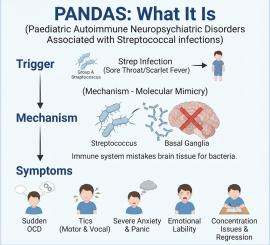
PANDAS and PANS
PANDAS (Paediatric Autoimmune Neuropsychiatric Disorders Associated with Streptococcal infections) and PANS (Paediatric Acute-onset Neuropsychiatric Syndrome) describe a sudden, dramatic onset of obsessive-compulsive symptoms and/or severe eating restriction, often alongside other neuropsychiatric changes, following an infection or other trigger. PANDAS is specifically linked to streptococcal infection, while PANS can follow other infections or triggers. BNC provides psychological assessment and support for children experiencing these symptoms, working alongside the GPs and medical specialists who manage the underlying medical trigger.
Signs You May Notice
- Sudden, dramatic onset of obsessive-compulsive behaviours
- Severe food restriction or sudden changes in eating
- Regression in age-appropriate skills, such as handwriting or toileting
- New or worsening separation anxiety and clinginess
- Tics or unusual movements
- Sudden mood changes, irritability or aggression
- Sleep disturbances
- Increased sensory sensitivities
Assessment and Support at BNC
Because PANDAS/PANS involves both a medical and a behavioural component, assessment and treatment usually involves a team. A GP, paediatrician or immunologist investigates and manages the underlying infectious or immune trigger, while psychological support addresses the neuropsychiatric symptoms themselves. At BNC, our psychologists assess the behavioural and emotional symptoms associated with PANDAS/PANS and provide therapy and practical strategies for the child and family, working collaboratively with the young person's medical team.
Frequently Asked Questions
What is the difference between PANDAS and PANS?+
PANDAS refers specifically to sudden-onset OCD or tic symptoms triggered by a streptococcal infection. PANS is a broader term for the same sudden-onset presentation triggered by other infections or causes. Both describe a rapid, dramatic change in a child's behaviour rather than a gradual onset.
How is PANDAS/PANS diagnosed?+
Diagnosis typically involves a medical assessment, often by a paediatrician or immunologist, to investigate infection history and rule out other causes, alongside clinical observation of the sudden-onset symptoms. There is no single test that confirms PANDAS/PANS on its own.
What role does BNC play in PANDAS/PANS care?+
BNC provides psychological assessment and support for the neuropsychiatric symptoms of PANDAS/PANS, such as OCD behaviours, anxiety and mood changes, working alongside the child's GP or medical specialist, who manages the underlying medical trigger.
Can PANDAS/PANS symptoms improve?+
With appropriate medical and psychological support, many children see meaningful improvement in symptoms over time. Treatment is individualised to the child's specific presentation and medical circumstances.
Does Medicare cover psychological support for PANDAS/PANS?+
With a Mental Health Care Plan from a GP, Medicare rebates may be available for eligible psychology sessions. Your GP can advise on eligibility for your circumstances.
PANDAS (Paediatric Autoimmune Neuropsychiatric Disorders Associated with Streptococcal infections) is a medical diagnosis for children who develop a sudden onset of neuropsychiatric symptoms — such as tics or obsessive-compulsive behaviours, following infection with Group A beta… more