Behavioural Neurotherapy Clinic
Committed to treating the underlying causes


Home
Contact Us
ADHD Assessment
ADHD news
ADHD Treatment
Alzheimer's, dementia
Anxiety and panic
Autism Spectrum Disorders
Cellular malnutrition
Central Auditory Processing
Disruptive Behaviours
Grief
Learning Difficulties
Neurotherapy
PANDAS
Post Concussion Syndrome
QEEG Brainmapping in ADHD
Rett Syndrome
Sexual Dysfunctions
Sleep difficulties
Stimulant medication
Visual Processing & Dyslexia


ADHD, attention deficit hyperactivity disorder

ADHD, Adult ADHD, Learning Difficulties Dyslexia and  IBS have underlying causes, which we are committed to investigating and treating.

ADHD, Attention Deficit Hyperactivity Disorder

ADHDADHD

ADHD Assessment and biomedical treatment booklet.

For some children, medication may be useful in the short-term to improve attention and control some fidgety, hyperactive behaviours and help the child settle in school. However, research and clinical practice indicates that for most children ADHD can be treated effectively and with long-term results without drugs. Download...


DyslexiaDyslexia and Learning Difficulties

Learning difficulties, Dyslexia, reading, writing and maths difficulties may originate from essential nutrient deficiencies during early years of brain development. These causal factors can be assessed and treated effectively, resulting in marked improvements. Nutritional supplements can optimise brain function and Neurotherapy can retrain brain activity. Read more...


autismAutism


At the clinic, diagnosis, Biomedical Assessment and Treatment protocols are based on the most up to date scientific findings in Autism research. The Clinic's multidisciplinary Medical, Psychological and Clinical Neuroscience team is trained in Nutritional and Environmental Medicine and are involved in ongoing research to find addressable causes and treatment options for children with Autism. Read more...


IBSIBS

ADHD symptoms, anxiety and depression are often associated with Irritable Bowel Syndrome (IBS). Recent research indicates that IBS affects at least 20% of the western world and is on the increase. Read more..


Download a PDF handout...


anxietyAnxiety and Depression

ADHD can be secondary to Anxiety and depression. 70-90% of people with Irritable Bowel Syndrome (IBS) also suffer from Anxiety and Depression. Treating the IBS  considerably improves or normalises symptoms of ADHD, anxiety, panic and depression. In some cases psychological factors may need to be addressed with cognitive Behaviour Therapy (CBT). IBS, anxiety, panic and depression can be treated effectively without drugs. Read more...


Alzheimer's brainAlzheimer's Dementia

Alzheimer's dementia starts to develop years before full symptoms are apparent. The early symptoms are so similar to depression with mild memory loss that conventional Neuropsychological testing cannot differentiate between them until its too late and irreversible damage to brain cells are already happening. However QEEG brainmapping has been shown in a number of studies to differentiate between the two disorders with high specificity up to 12 years before full-blown symptoms are seen. Recent research indicates that Alzheimers dementia is caused by tiny bleeds in micro-vessels in the brain, forming the amyloid-beta protein responsible for dementia. There are also nutrients known for their ability to strengthen the capillaries and break up amyloid-beta protein. Read more...


mappingQEEG Brainmapping

The brain electrical activity of children with ADHD, Learning difficulties and other childhood disorders can be effectively analysed using QEEG. There is a considerable body of Neuroscience research indicating that QEEG can differentiate ADHD from other disorders and lead to effective  treatment options, without the use of drugs. QEEG is used in specialist clinics worldwide to identify those brain areas which are dysfunctional and cause attention deficits and learning difficulties. Read more...


NeurotherapyNeurotherapy

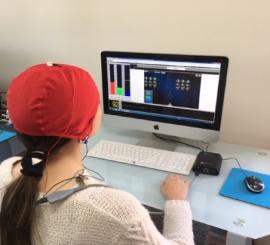
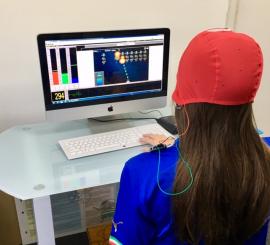
Neurotherapy for ADHD involves retraining abnormal brain electrical activity through brainwave biofeedback. There is now strong evidence indicating that Neurotherapy can redress brainwave patterns and improve or normalise epilepsy, ADHD, Learning Difficulties and mood problems in approximately 80% of children with these difficulties which rob them of their potential to learn effectively. Read more...


PCSPost-concussion Syndrome

Post-concussion Syndrome can mimic ADHD, Anxiety, Depression, anger problems and other disorders. Even a minor blow to the head, with or without loss of consciousness, can cause changes in mood and personality and affect concentration and focus.  Find out why and how to treat the condition effectively with nutrients and Neurotherapy. Read more...


Nutrition

The World Health Organisation, the US National Institute of health, the NHMRC and major Medical and Nutritional Science journals have all published research indicating that we are not getting adequate nutrients from our modern diet of processed foods grown in impoverished soils with chemical fertilisers and with antibiotics, preservatives and additives added. Worse still, some children do not eat enough fruit and vegetables and are therefore lacking essential nutrients for cellular and brain function. Read more...

Clinic staff and associates make up a unique multidisciplinary team of Health Professionals dedicated to applying the latest research findings from Medicine, Neuroscience, Psychology, Psychophysiology, Nutrition and Microbiology to clinical practice. All clinic staff are involved in research projects aimed at finding better treatment outcomes in clinical practice for ADHD, Autism, Learning difficulties, Dyslexia, IBS, Anxiety and Depression. The preferred treatment modalities used at the clinic aim to address fundamental causes that have a profound influence on our cellular structures and function and on brain connectivity and function.

Please consult the health professionals at the clinic for diagnosis and advice on treatment options applicable in your circumstances. The contents of this web site are intended for information purposes only. It is not intended to diagnose or form the basis for self diagnosis or treatment of ADHD, Learning difficulties, Autism, IBS or other disorders.