


Early signs of Autism Spectrum Disorder (ASD)
Potentially early signs of autism spectrum disorder
Here are some of the most common early signs that may alert parents, caregivers, or professionals that a child could be on the autism spectrum:
- Lack of eye contact or limited use of facial expressions when interacting with others
- Not responding to their name by 12 months of age
- Delayed speech and language development or loss of previously acquired language skills
- Limited use of gestures, such as pointing, waving, or showing objects to others
- Rarely sharing enjoyment or interests with others (e.g., not showing or bringing things to share)
- Difficulty engaging in back-and-forth conversations or play
- Repetitive movements like hand-flapping, rocking, or spinning on the spot
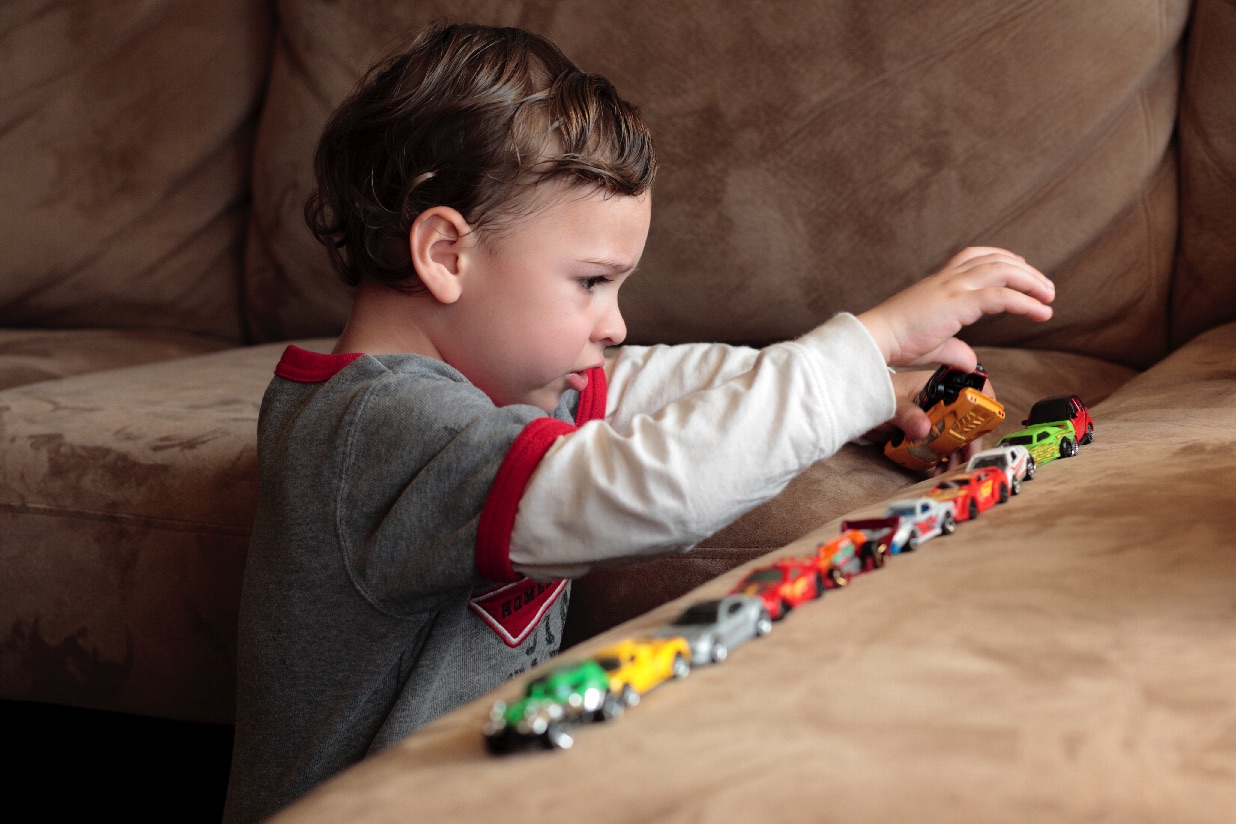
- Lining up toys and objects instead of playing typically
- Focussing on part of an object rather than using the object as it was meant (e.g. spinning wheels of toy cars)
- Insistence on sameness, routines, or rituals, and becoming upset at small changes
- Highly focused interests or intense, unusual attachments to certain objects or topics
- Unusual reactions to sensory input, such as being overly sensitive to noises, lights, textures, or smells
- Walking on tip toes
- Limited social smiling or lack of imitation of others’ behaviours
- Difficulty understanding or expressing emotions—their own or others’ (CDC, 2022; Autism Speaks, 2023).
These signs can appear as early as 12–18 months, though variations exist. Having one or two signs doesn’t necessarily mean a child has autism, but noticing several may warrant further evaluation.
DSM-5 criteria for autism spectrum disorder
The Diagnostic and Statistical manual of Mental Disorders (DSM-V) defines three key areas for an Autism Spectrum Disorder (ASD) diagnosis:
-
Social Communication and Interaction
Children with ASD often have difficulty with social-emotional reciprocity, non-verbal communication (like eye contact or gestures), and developing or maintaining relationships. -
Restricted, Repetitive Behaviours or Interests
This includes repetitive movements or speech, strict routines or rituals, intense interests, or unusual reactions to sensory input. -
Symptoms Present in Early Development
Signs must be noticeable in early childhood, even if they become more apparent as social demands increase -
These disturbances are not better explained by global developmental delay or intellectual disability which frequently co-occur with ASD; to make dual diagnoses of ASD and intellectual disability, social communication should be below that expected for general developmental level.
Updated on: 09/02/2026 by: Dr. Jacques Duff – BA Psych; Grad Dip Psych; PhD; MAPS; MECNS; MAAAPB; MISNR; FANSA
Reviewed on: 22/02/2026 by: Bernard Ferriere - BA; Grad Dip App Psych; Dip Clinical Hypnosis; FCCP; MAPS; MASH; Clinical Psychologist