
Visual Processing Disorder and Dyslexia Melbourne
Visual processing disorder refers to a reduced ability to make sense of visual information. This is distinct from difficulties with sight or sharpness of vision. Instead, visual processing difficulties affect how the brain interprets visual information. A person with visual processing disorder may have difficulty discriminating foreground from background, recognising forms, judging size, or understanding position in space, despite having normal visual acuity.
How can a psychologist help
Psychologists can support children experiencing dyslexia or visual processing difficulties in several ways. A comprehensive assessment can help identify a child's specific learning profile, distinguishing between dyslexia, visual processing difficulties, and other conditions. Based on assessment findings, psychologists may provide targeted interventions focusing on reading, writing, and processing skills, and can work collaboratively with teachers and families to develop support plans that include appropriate classroom accommodations. Psychologists can also assist with the emotional and behavioural challenges that sometimes accompany learning difficulties, such as anxiety or low self-esteem. Where specific visual-motor or perceptual difficulties are identified, and the child's diet may be lacking nutrients, psychologists may refer families to other practitioners, such as as a nutritionist or dietician, for further assessment and support.
Understanding Dyslexia
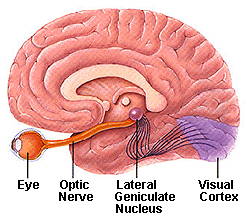
Dyslexia is a brain-based learning difficulty that affects reading, writing, and spelling. Phonological processing difficulties, including challenges with phonological awareness, phonological memory, and phonological recoding, are widely considered a core feature of developmental dyslexia (Share, 2021). Dyslexia exists on a spectrum and presents differently across individuals.
Research has explored several neurological pathways that may contribute to reading difficulties. One area of ongoing investigation involves the visual processing pathways in the brain. The brain processes visual information through two main systems: the parvocellular pathway, which contributes to the perception of colour and fine detail, and the magnocellular pathway, which is involved in processing movement and rapid changes in visual information.
Some researchers have proposed that differences in magnocellular pathway function may contribute to reading difficulties in some individuals with dyslexia (Stein, 2023). However, not all individuals with dyslexia show measurable magnocellular differences, and the evidence does not support magnocellular dysfunction as a universal explanation (Zoccolotti & Burani, 2022). This remains an active area of research and the evidence base continues to develop.
How can a nutritionist help with dyslexia
Alex Richardson and colleagues at Oxford University have conducted significant research exploring the links between omega-3 fatty acid deficiency, visual processing pathways (including the parvocellular and magnocellular theories), and developmental dyslexia. Richardson’s work emphasizes that polyunsaturated fatty acids, particularly omega-3s, are crucial for optimal brain development and function. Deficiencies in these fatty acids have been associated with a range of neurodevelopmental disorders, including dyslexia, where visual processing—specifically, the function of the parvocellular and magnocellular pathways—can be impaired. Richardson and Taylor (2000) discuss how visual deficits in dyslexia may be connected to selective impairments in these pathways and suggest that omega-3 supplementation could improve visual function and, by extension, reading abilities in affected individuals (Taylor & Richardson, 2000; Richardson, 2004).
Building on these findings, other scholars have investigated the rationale for omega-3 supplementation as part of interventions for dyslexia. For example, Aleci (2017) reviews evidence that polyunsaturated fatty acids (PUFA) deficiencies during development may alter the structure and function of the parvocellular layers in the visual system, which could contribute to the reading difficulties seen in dyslexia (Aleci, 2017).
Note: While these studies show some positive trends, the evidence base is still evolving. While direct, large-scale randomized controlled trials using RBC EFA status as a stratification factor are rare, the literature strongly suggests that baseline RBC EFA profiles can influence the outcome of omega-3 supplementation in dyslexia and related disorders. Those with the most deficient or imbalanced profiles are likely to benefit the most from targeted nutritional interventions (Richardson, 2001; Taylor & Richardson, 2000; Borasio et al., 2023).
Nutritionists can play a vital role in identifying dietary imbalances and RBC EFA profiles, and recommending appropriate omega-3 supplementation or dietary changes. By working closely with families and educators, nutritionists can help address underlying nutritional factors that may exacerbate dyslexic symptoms, thereby supporting a more comprehensive, individualized approach to intervention (Richardson & Ross, 2000; Richardson, 2001).
Common experiences reported by people with dyslexia:
- Words or letters appearing to move or shift on the page
- Difficulty distinguishing between visually similar letters such as "d" and "b"
- Difficulty tracking lines of text accurately
- Sensitivity to high-contrast backgrounds, such as black text on white paper
Developmental dyslexia and developmental coordination disorder (DCD) frequently co-occur, with some studies reporting rates of up to 50%, and both may involve challenges with fine motor control and timing (Nemmi et al., 2023).
Coloured overlays or tinted lenses are reported by some individuals to reduce visual discomfort when reading. However, a systematic review of systematic reviews concluded that there is not yet a reliable evidence base on which to recommend coloured overlays or lenses for the alleviation of reading difficulty (Suttle et al., 2018), a finding supported by a further systematic review concluding that studies with lower risk of bias provide less support for their benefit (Griffiths et al., 2016). Coloured overlays should not be used as a standalone treatment for dyslexia and should be considered only as part of a broader, individually tailored support plan following appropriate assessment.
Other Visual Processing Difficulties
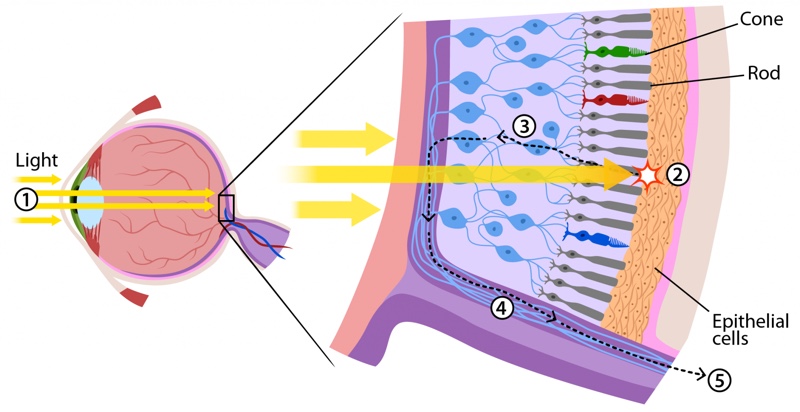
Visual processing difficulties, which are distinct from problems with visual acuity, can affect a child's ability to interpret movement, spatial relationships, form, or direction. Visual processing difficulties frequently co-occur with other learning difficulties, including central auditory processing disorder (Brimo et al., 2021). Early identification and appropriate support are important. Where visual processing difficulties are suspected, referral for specialist assessment is recommended.
Visual Processing Assessment
Assessment for visual processing difficulties should be thorough and individually focused, identifying the specific nature of any visual processing difficulty in order to determine the most appropriate support. A multidisciplinary approach, involving psychologists, occupational therapists, and other relevant specialists depending on the nature of the difficulty, is often beneficial.
Visual Processing Intervention
Frequently Asked Questions
What's the difference between dyslexia and visual processing disorder?+
Can a psychologist diagnose dyslexia?+
What are common signs of dyslexia?+
Can nutrition help with dyslexia or visual processing difficulties?+
What does a visual processing assessment involve?+
Is dyslexia treatable?+
Intervention for visual processing difficulties should be individually tailored and based on the results of a thorough assessment. Support strategies may include targeted exercises, use of specific learning tools or programs, environmental adjustments, and academic accommodation plans. The effectiveness of any intervention will depend on the nature and severity of the individual's difficulties, and outcomes vary between individuals.
Updated on 22/08/2026 by: Dr Jacques Duff PhD- BA Psych; Grad Dip Applied Psychology; FANSA, Clinical Neuroscientist.
Reviewed on 22/08/2026 by: Bernard Ferriere- Clinical Psychologist; BA; Grad Dip Applied Psychology; Dip Clinical Hypnosis; MAPS