
Nutrition Support for ADHD & Neurological Health in Melbourne
Neurodevelopment: Nutrition and lifestyle choices begin shaping mental health and brain function from the first moments of life. Even before birth, nutrients delivered from the mother interact with foetal DNA, influencing the development of cells, enzymes, and the neural circuitry that will support cognitive and emotional health across the lifespan. These nutrient-gene interactions don’t stop after birth; they continue to play a central role in growth, repair, and the day-to-day functions required for mental wellbeing (Bekdash, 2024).
Mental Health: When it comes to mental health, these same interactions are just as crucial. Our brains and nervous systems rely on the right nutrients at the right times, not just for development, but for handling stress, regulating mood, and thinking clearly. If something goes off track, problems can crop up. Sometimes, the issue is in our genes—mutations can make it harder for our bodies to produce certain enzymes or brain chemicals. Other times, it’s about what’s missing from our diet. Without enough of the nutrients our brains need, those vital chemical reactions slow down or stop. And then there are environmental factors — toxins, pollution, chronic stress, and other lifestyle influences — that can interfere with how our genes and nutrients work together, further increasing the risk of mental health disorders (Suárez-López et al., 2023; Granero, 2022; Waheed et al., 2024; Himmerich & Mirzaei, 2024).
Recent Nutritional Guidelines: It’s no surprise, then, that recent clinical guidelines are urging a broader approach to mental health care. For example, the Autism CRC guidelines and National ADHD clinical treatment guidelines recommend that doctors consider not only medication and therapy, but also nutrition, exercise, sleep, and stress management as part of a comprehensive, multimodal treatment plan (Wong et al., 2024; Teasdale et al., 2025). Recent research and expert consensus highlight that good mental health depends not just on treating symptoms, but on supporting the brain and body with the nutrients and healthy habits they need to thrive (Marcelli et al., 2025; Marx et al., 2023).
Looking for personalised support? Our Certified Practising Nutritionist works with children, teens and adults via Zoom. Find out what a clinical nutritionist can help with.
Australian Dietary Guidelines
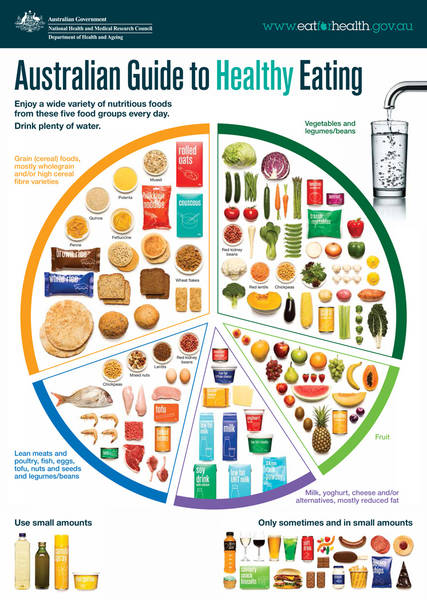
The National Health and Medical Research Council released the Australian Dietary Guidelines in February 2013. This is the fourth edition of dietary guidelines in Australia and the next revision is scheduled for late 2026. The existing five pillars of these guidelines are:
- Stay active and eat the right amount of nutritious food and drinks to maintain a healthy weight.
- Children and teens: Eat enough to grow, be active daily, and have regular growth checks.
- Older adults: Eat well and keep moving to maintain strength and a healthy weight.
2. Eat a wide variety of nutrient-rich healthy foods every day:
- Lots of vegetables (different types and colors) and legumes/beans
- Fruit
- Mostly wholegrain or high-fibre grains (breads, pasta, rice, oats, etc.)
- Lean meats, fish, eggs, tofu, nuts, seeds, and legumes/beans
- Reduced-fat dairy or alternatives (except for kids under age 2)
- Drink plenty of water
3. Limit foods high in saturated fat, added salt, added sugars, and alcohol:
- Avoid foods like pastries, processed meats, fried foods, chips, and commercial snacks
- Swap butter, cream, and coconut oil for healthier fats (olive oil, nut butters, avocado)
- Choose lower-salt foods, and don’t add extra salt
- Cut back on sugary drinks and snacks
- If drinking alcohol, keep it moderate (none for those pregnant, trying, or breastfeeding)
4. Encourage and support breastfeeding.
5. Prepare and store food safely.
The main thrust of the proposed 2026 Australian dietary guidelines is expected to reflect both updated nutritional science and broader considerations of environmental impact and public health which is expected to include several key updates:
Greater focus on sustainability: The guidelines will likely address not only health and nutrition but also environmental sustainability, reflecting the unique ways food is produced in Australia and the need for food choices that are both healthy and environmentally responsible (UWA; ABC News).
Emphasis on plant-based and lean proteins: There will be a stronger push toward consuming more lean proteins and plant-based sources, such as fish, poultry, beans, and legumes, with moderate intake of dairy, eggs, and lean meats (Nutriblooms; The Nutrition Academy).
Continued advice for balanced, varied diets: The guidelines will maintain recommendations for balance, variety, and moderation in food choices, echoing the principles in previous editions (NHMRC).
Public health outlets and Dietitians Australia have predicted several key shifts in the upcoming release:
Ultra-Processed Foods: Stronger and clearer messages to restrict highly processed foods currently dominating western diets.
Environmental Sustainability: Policies to Integrate the food systems and climate changes to promote long-term food security into dietary choices for Australians.
Equity and Affordability: Considering socioeconomic factors, food security, and the inequities that affect access to healthy foods.
Older Australians: Recommendations to tailor specific advice for aging Australians, focusing on their increased requirements for nutrients, protein and calcium.
The new U.S. government food pyramid
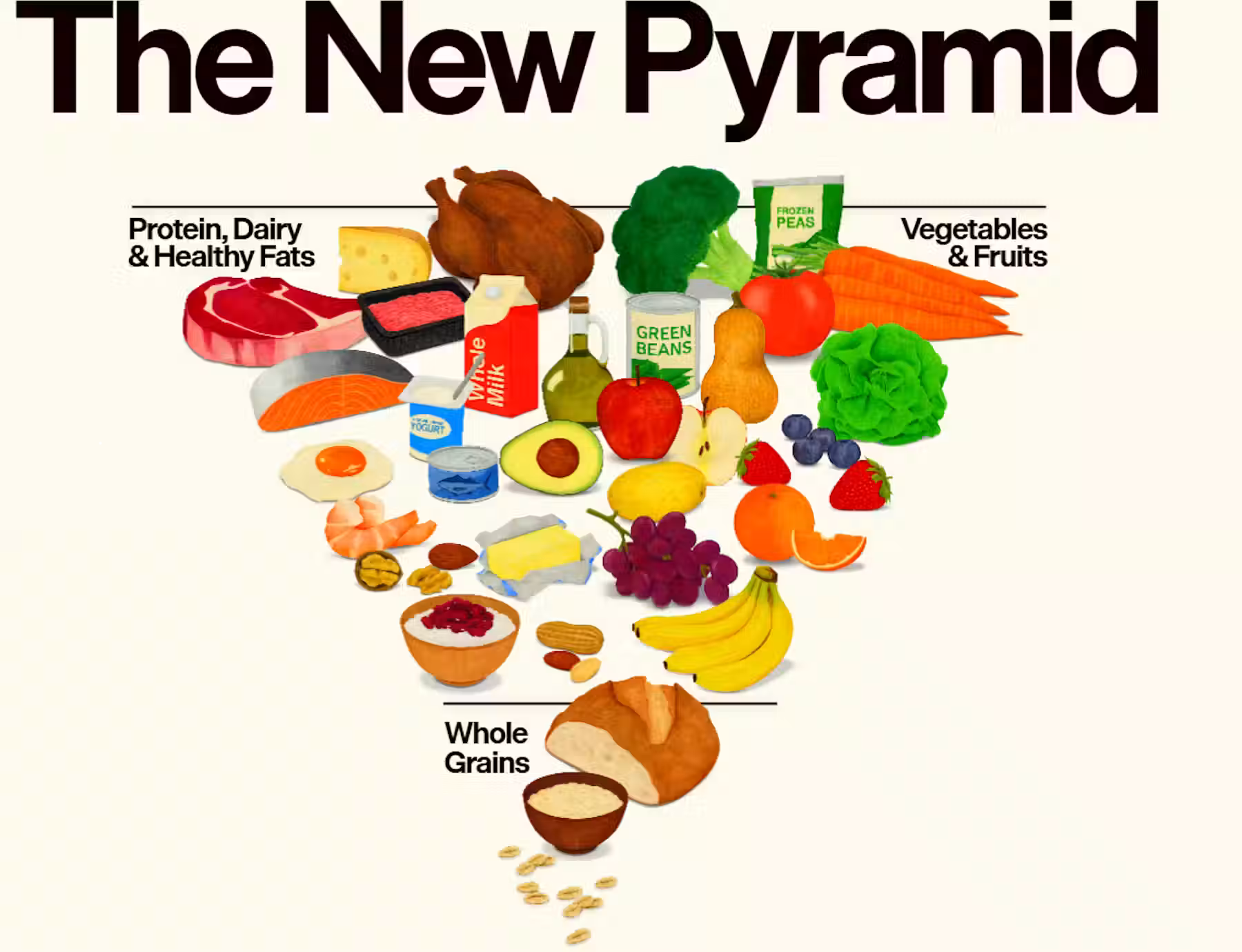
The United Stares revises its official Dietary Guidelines for Americans every five years. This document has shaped what Americans should eat to stay healthy and has been the US national nutrition policy for nearly fifty years.
The 2025–2030 edition introduces a new emphasis on limiting ultraprocessed foods, prioritizing whole, nutrient-rich foods, and explicitly calls for a shift away from refined carbohydrates, added sugars, and artificial additives (Taren et al., 2026). This is a marked evolution in the guidelines, in line with growing evidence that diet quality—especially the reduction of ultraprocessed foods—has a direct effect on chronic disease risk and population health (Matthews & Kurnat-Thoma, 2024).
Chronic diseases linked to poor diet, including obesity and diabetes, are at crisis levels in the U.S.; over 70% of adults are overweight or obese, and rates of prediabetes in adolescents are rising. These trends have significant public health, economic, and even military readiness implications (Matthews & Kurnat-Thoma, 2024; Neuhouser, 2019). Research also shows that most U.S. healthcare spending is directed toward treating these preventable, diet-related conditions (Matthews & Kurnat-Thoma, 2024).
To improve America's health, DHHS states that there is a need to get back to fundamentals and focus on whole, nutrient-rich ingredients, things like proteins, dairy, vegetables, fruits, healthy fats, and whole grains.
This means cutting way back on ultra-processed foods that are packed with refined carbs, added sugars, too much salt, unhealthy fats, and artificial additives.
Making these changes could shift the nation's health outlook for the better.
Right now, the U.S. faces a health crisis: almost 90% of healthcare spending goes toward treating chronic illnesses.
Many of these diseases aren't just bad luck or genetics, they're linked to the typical American diet, which has become heavy on processed foods and low on physical activity.
The results are severe: over 70% of adults in the U.S. are overweight or obese.
Nearly a third of teens aged 12 to 17 are already prediabetic.
Diet-related chronic conditions now disqualify many young people from joining the military, which hurts national readiness and blocks a traditional path to career advancement.
For years, government policies have favored cheap, low-quality foods and prioritised treating illness with drugs instead of preventing it in the first place.
This situation stems from misguided policy decisions, underfunded nutrition research, and poor coordination at every level of government and the private sector. This latest edition puts an emphasis on eating more protein and healthy fats, while cutting back on ultraprocessed foods (HHS).
Role of a nutritionist
A nutritionist working within a psychology clinic may use these guidelines to provide a range of services, in collaboration with other health professionals:
- Nutritional assessment and support: Assessing dietary habits and nutritional status, and providing evidence-based guidance to support overall health and well-being.
- Management of eating disorders: Working as part of a multidisciplinary team to support patients with diagnosed eating disorders, in line with best-practice guidelines.
- Education on nutrition and mental health: Offering information about the relationship between diet and mental health, including how certain nutrients may influence general well-being.
- Support for medication-related nutrition concerns: Advising on managing potential nutritional side effects associated with some medications, as appropriate.
- Assisting with behaviour change: Supporting patients in making informed choices about food and eating patterns, always within the scope of practice and in accordance with current guidelines.
- Participation in integrated care: Collaborating with psychologists and other health professionals to provide patient-centred care.
Nutritionists providing these services must hold appropriate qualifications and registration, and all advice or interventions are based on current, credible evidence. No guarantee of specific outcomes can be made, and all care is tailored to individual needs, in line with relevant professional standards and legal requirements.
Updated on 19/08/2026 by: Dr Jacques Duff PhD- BA Psych; Grad Dip Applied Psychology; FANSA, Clinical Neuroscientist.
Reviewed on 19/08/2026 by: Bernard Ferriere- Clinical Psychologist; BA; Grad Dip Applied Psychology; Dip Clinical Hypnosis; MAPS