
|
Autism and Asperger's Syndrome
Autism Spectrum
Disorder (ASD) is the name given to describe the wide range of
behaviours amongst the Autistic population. Autistic children
are less able to interact with the world as other children do.
Typically they have deficits in three key areas:
- Verbal and non-verbal
Communication.
Social awareness
and interactions.
Imaginative play
(variable interests and behaviours).
There are separate labels for different
points on the Autism spectrum. At the least affected end, you
may find labels such as "Asperger's Syndrome", "High Functioning
Autism" and "Pervasive Developmental Disorder - Not Otherwise
Specified". At the other end of the spectrum you may find labels
such as "Autism", "Classic Autism" and "Kanner Autism".
Autism, Asperger's and Autism
Spectrum Disorder: Diagnosis,
Assessment and Treatment
We believe that a diagnosis of AUTISM should be the starting
point, prompting health professionals to investigate further
and initiate assessment and treatment of the possible
underlying causes. Unfortunately all too often parents are
told that "Autism" is not treatable, leaving the possible
root causes uninvestigated and untreated. At the clinic
we treat Autism based on a combination of the research and
treatment protocols of DAN, Pfeiffer, Wakefield and
Shattock. We have added other components to these protocols
based on recent Australian research. This research was
presented at the 2005 Autism Victoria conference by Dr.
Henry Butt and Jacques Duff from this clinic. |
Investigation and treatment of Biological,
nutritional and Metabolic factors have led to improvement of
symptoms or complete resolution of symptoms in a multitude of cases
worldwide. Autism is treatable and recovery possible (at least in
some children).
After
reading this page click here to visit our Autism Web Site
1. Characteristic behaviours in Autism
Spectrum Disorder
The following descriptions give a guide to many of the behaviours
observed in children, teenagers and adults with an Autism Spectrum
Disorder. It is important to remember that everyone is different and
very few children or adults will show all of these
characteristics.
The three lists below based on an article
"What Is Autism?" written by Dr. Di Boswell and Ms. Helen Baker, is
reproduced from the Autism Victoria web site and shows a typical
progression from childhood into adulthood.
Preschool
Years
The
preschool autistic child is handicapped in learning and interacting
with the world on account of a combination of a number of possible
biological and metabolic dysfunctions affecting brain function,
discussed in a later section entitled: Autism: a hypothesis.
Consequently he falls behind in higher order functions, such as
development of language, reasoning, cognitive skills, socialisation,
creativity, range of options in situations, imagination and decoding
the multitude of symbolic representations that we take for granted
as human beings. In addition, his physical ailments discussed in
associated symptoms and ailments frustrate and irritate him.
Together, the impaired higher order functions and physical ailments
result in the behaviours that we label as Autistic.
-
Food problems. The child can be resistant to solid foods or may
not accept a variety of foods in their diet.
-
Unusual responses to other people. A child may show no desire to
be cuddled, have a strong preference for familiar people and may
appear to treat people as objects rather than a source of
comfort.
-
The child tends not to look directly at other people in a social
way. This is sometimes referred to as a lack of eye contact.
-
There may be constant crying or there may be an unusual absence
of crying.
-
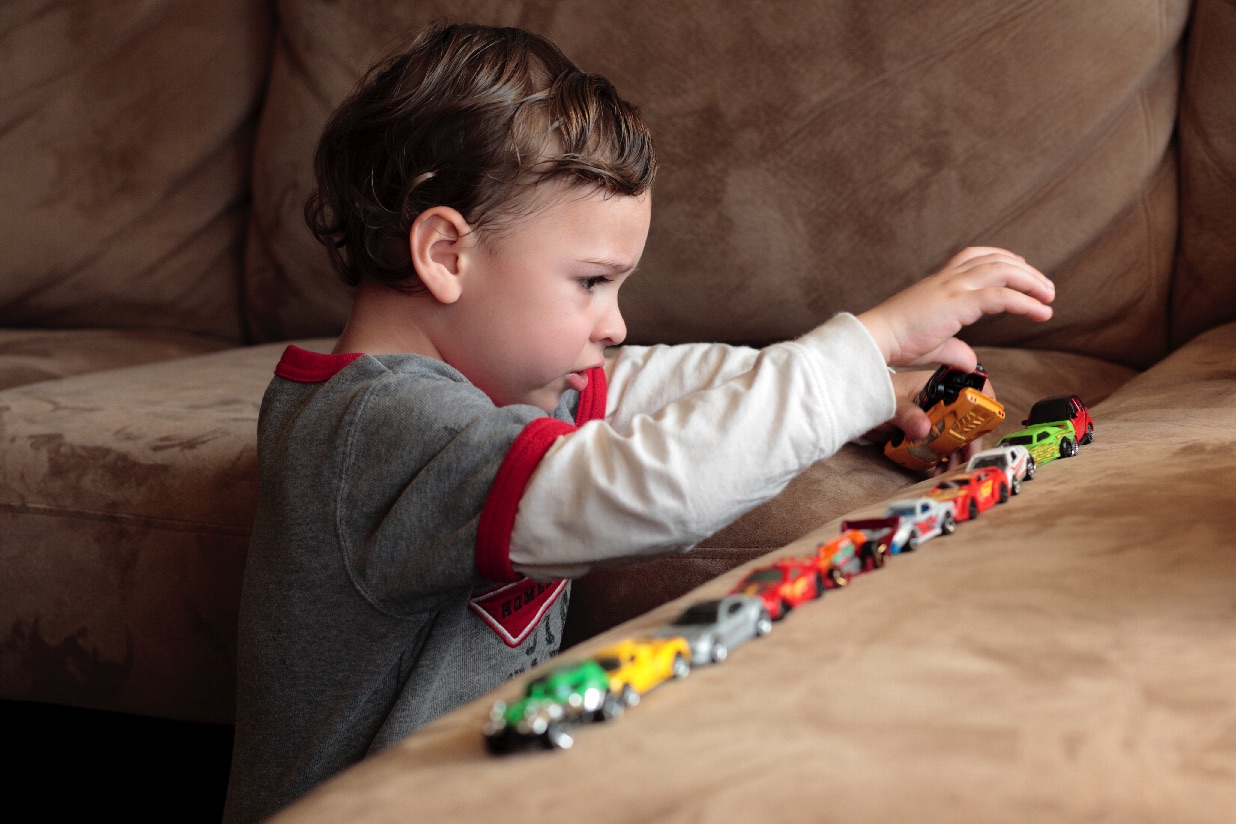
The child often has marked repetitive movements, such as
hand-shaking or flapping, prolonged rocking or spinning of
objects.
-
Many children develop an obsessive interest in certain toys or
objects whilst ignoring other things.
-
The child may have extreme resistance to change in routines
and/or their environment.
-
The child may appear to avoid social situations, preferring to
be alone.
-
There is limited development of play activities, particularly
imaginative play.
-
The child may have sleeping problems.
-
There may be an absence of speech, or unusual speech patterns
such as repeating words and phrases (echolalia), failure to use
'I', 'me', and 'you', or reversal of these pronouns.
-
There are often difficulties with toilet training.
-
The child generally does not point to or share observations or
experiences with others.
-
The child may be extremely distressed by certain noises and/or
busy public places such as shopping centres.
-
There is no evidence of disability in the child's physical
appearance - many children with an Autism Spectrum Disorder are
very attractive in appearance.
Primary School Years
-
Parents may notice that much of the distressing behaviour of the
preschool years decreases.
-
There can be a period of relative calm and adjustment, but
resistance to the demands of others remains.
-
There can be an increase in social interest; they better
tolerate playing beside other children and may begin to show
attachments to certain people (often adults or younger
children).
-
Echolalia speech, if present, decreases and spontaneous speech
emerges. About half of the children who are non-verbal in the
preschool years will acquire some speech.
-
School behaviour problems can occur, often because the child
finds it difficult to make social judgments about other
children.
-
Ritualistic and compulsive behaviour patterns are very common.
-
Hyperactivity and a poor attention span are often observed,
usually because the child has trouble understanding instructions
from the teacher and classroom 'rules'.
-
The child's difficulty in understanding other people and
interpreting what is going on around them leads to significant
levels of anxiety.
-
Many children will show a lack of motivation or desire to please
others.
-
These children have difficulty transferring skills learned in
one setting to another setting, e.g., school to home.
Adolescence to Adulthood
-
The behaviour disturbance and mood imbalance so typical of
teenagers seems to be exaggerated for those with an Autism
Spectrum Disorder. It may start a little later, and continue
into late teens and early twenties but eventually there is a
resumption of calmer behaviour.
-
A few adolescents show marked improvement in their behaviour and
skills and some may show serious behaviour regression - but all
survive adolescence!
Sexual development and interest varies with
physical development but in general is delayed.
-
The commencement of menstruation and sexual drive are usually
tolerated calmly but exhibitionism and masturbation are
sometimes problems. This behaviour can usually be redirected
using behaviour modification techniques. The video Autism The
Teen Years addresses this issue very well.
-
The presence of a disability seems to become more obvious in the
physical appearance of the older person, especially if they also
have an intellectual disability.
-
Epilepsy or seizures may develop in a number of adolescents with
an Autism Spectrum Disorder
-
Increased levels of anxiety and the development of depressive
symptoms often occur and carers need to be alert to this and
seek professional help. Medication may be prescribed to help
'take the edge' off their anxiety levels
-
If they have received specialist intervention, adults with an
Autism Spectrum Disorder are able to partly overcome their
difficulties but continue to require sensitive and sustained
support, usually from their families.
(Based on an the article "What Is Autism?" written by Dr Di
Boswell and Ms Helen Baker, ACT) for Autism Victoria.
2. Criteria for diagnosis of Autism
(DSM-IV)
The
following is the list of criteria from the Diagnostic and
Statistical Manual of Mental Disorders (DSM-IV). Parents are urged
to seek professional advise and not to self-diagnose the disorder in
their children. It requires considerable experience and training to
become competent at making a diagnosis. Please call the clinic for
advice.
A. A total of six (or more) items from (1), (2), and
(3), with at least two from (1), and one each from (2) and
(3):
|
|
(1) qualitative impairment in social
interaction, as manifested by at least two of the following: |
-
marked impairment in the use
of multiple nonverbal behaviors such as eye-to-eye gaze,
facial expression, body postures, and gestures to
regulate social interaction
-
failure to develop peer
relationships appropriate to developmental level
-
lack of spontaneous seeking
to share enjoyment, interests, or achievements with
other people (e.g., by a lack of showing, bringing, or
pointing out objects of interest)
-
lack of social or emotional
reciprocity
|
|
(2) qualitative impairments in
communication as manifested by at least one of the
following: |
-
delay in, or total lack of,
the development of spoken language (not accompanied by
an attempt to compensate through alternative modes of
communication such as gesture or mime)
-
in individuals with adequate
speech, marked impairment in the ability to initiate or
sustain a conversation with others.
-
stereotyped and repetitive
use of language or idiosyncratic language
-
lack of varied, spontaneous
make-believe play or social imitative play appropriate
to developmental level
|
|
(3) restricted repetitive and
stereotyped patterns of behavior, interests, and activities,
as manifested by at least one of the following: |
-
encompassing preoccupation
with one or more stereotyped and restricted patterns of
interest that is abnormal either in intensity or focus
-
apparently inflexible
adherence to specific, nonfunctional routines or rituals
-
stereotyped and repetitive
motor mannerisms (e.g., hand or finger flapping or
twisting, or complex whole-body movements)
-
persistent preoccupation with
parts of objects
|
B.
Delays or abnormal functioning in at least one of the
following areas, with onset prior to age 3 years:
|
-
social interaction,
-
language as used in social
communication, or
-
symbolic or imaginative play.
|
C. The disturbance is not
better accounted for by Rett Disorder or Childhood
Disintegrative Disorder
|
3. Symptoms and ailments associated
with Autism
While
the DSM-IV provides a comprehensive list of symptoms of ASD, every
parent with an Autistic child knows that there are associated
symptoms not listed above. The following are much more frequently
seen in the Autistic children than in non-Autistic children :
- Bothered by touch and physical contact,
- Hypersensitive to stimuli. e.g. noise, light, touch,
smells
- Fussy eater, eating a restricted range of foods
- Bothered by the texture of foods, preferring smoother
texture-free foods
- Will smell objects and food
- Easily put off by slightly different smells and tastes
in their favourite food
- easily frustrated and frequent tantrums that have no
apparent reason
- bags or dark circles under the eyes
- dry skin, eczema
- white spots on fingernails
- Tics, obsessiveness and compulsive repetitive behaviours
- frequent colds, flu, ear, nose and throat infections and
other ailments suggestive of impaired immunity.
- Gut problems characterised by loose stools or
constipation, bloating, excessive wind, lower abdominal
discomfort, tenderness or pain.
- poor muscle tone
- failure to thrive
- echolalia (repeating words or phrases)
- Pica (eating non-foods, e.g. paper or dirt)
4.
Autism: Hypotheses
We believe that autism may be caused when a child with a genetic
susceptibility is exposed to one or more of a number of
environmental insults resulting in a series of dysfunctional
interactions between Genes and Nutrients (Nutrigenomic
interactions). These can happen “in utero” (during pregnancy) or
post-natally.
Eventually these dysfunctional interactions
can affect body systems, most obviously the gastrointestinal,
endocrine, immune system and the central nervous system. The
complexity of the thousands if not millions of possible interactions
may well defy description. We can however, build a basic biomedical
model of autism, based on the published scientific evidence to-date.
The model that we developed and continuously refine the process
of human development: Genes and nutrients interact to enable a
single cell to multiply and differentiate to form multiple cell
systems and organs, each with their own specific functions. It is
the continuous interaction between the genetic code and nutrients
that grows a human being in the womb and early years; and maintains
optimum health and function throughout the lifespan. The following
is an outline of some of the most common mechanisms implicated in
the aetiology of Autism Spectrum Disorder:
-
The Genetic code may have flaws. While there is a
genetic component to Autism, genetics alone cannot explain the recent rise in
Autism in industrialised nations.
-
The cell membrane that protects each cell is less than optimum, leaving it
vulnerable. There is much support in animal and human studies that a reduced
intake in Omega 3 fatty acids results in impaired cell membranes and
Neurodevelopmental disorders.
- Antigens (foreign toxic matter, heavy metals, viruses and bacteria) attack
vulnerable cells and damage them, resulting in cells that cannot carry out their
function normally.
- Antigens can damage or change the genetic code in the cell, and when the cell
reproduces itself it does so with the changed code leading to dysfunction in
future cells.
- There is emerging evidence that a dysfunctional methylation system may result in
abnormal genetic expression leading to dysfunctional cells. Vit. B12, folate, B6
and Magnesium play a central role in regulating Methylation.
- Abnormal methylation can damage metallothionein protein which regulate
zinc/copper ratios and other metals in cell membranes.
- Impaired cellular structures can result in multi-systemic disorders, affecting
gastrointestinal, Immune, endocrine and central nervous system.
-
The delicate balance between
beneficial and detrimental bacteria in the gut can be upset by
antibiotics, food preservatives and other environmental toxic
additives, leading to a condition known as intestinal dysbiosis.
-
Opportunistic bacteria in the
gastrointestinal tract may irritate a vulnerable gut wall
resulting in irritable bowel syndrome, leaky gut and food
sensitivities.
-
Some bacteria can produce amines.
When these bacteria are overgrown, they can produce large
amounts of amines. Amines are known to have receptors in the
same areas in the brain as neurotransmitter receptors. This can
result in a scrambling of brain signals by amines.
|
A recent study has demonstrated a
link between autism and the Engrailed 2 (EN2) gene, which
may contribute to up to 40% of autism cases in the general
population. EN2 is involved in normal neural development.
The study provides further genetic evidence that EN2 might
act as an ASD susceptibility locus, and they suggest that a
risk allele that perturbs the spatial/temporal expression of
EN2 could significantly alter normal brain development."
|
(Am. J.
Hum. Genet., 77:851-868, November 2005)
This model goes part of the way towards
explaining why there is such diversity in Autistic behaviours. It
also explains why some interventions work for some children and not
others, highlighting the need for conducting Biomedical testing as a
basis for formulating hypotheses and initiating treatment.
5. Testing the Autism
Hypotheses
We
can’t do anything about the genetic code, but we might be able to
normalise some of the nutrient interactions and as a result
normalise the cellular structure and function of cells that make up
body systems, including: gut, endocrine, immune, gastrointestinal
and brain. When we succeed, we see improvements in general health,
gut function.
To test the hypothesis a number of blood tests,
urine analysis hair mineral analysis and an Extended Faecal
Microbiology Investigation is carried out. The test results
highlight the dysfunctional systems that need to be addressed and
prompt us to initiate treatment
6. Treating Autism (the recovery)
Research over the last 20 years has
suggested a relationship between maternal diet and the birth of an
affected infant, and recent evidence has confirmed that folic acid,
a water soluble vitamin, found in many fruits (particularly oranges,
berries and bananas), leafy green vegetables, cereals and legumes,
may prevent the majority of neural tube defects.
Extract from NHMRC Publication
Whilst 800 mcg of folic acid may help prevent neural tube defects
and Down Syndrome in Northern Europe where the Ultra violet (UV)
radiation is low. In Australia, and other high UV countries this may
not be adequate to protect against Neurodevelopmental disorders.
There is evidence to suggest that white skinned people are more
prone to folic acid being destroyed in subcutaneous tissues by UV.
That's one reason why indigenous people in high UV regions of the
world are dark skinned, as the melanin pigment effectively filters
UV and affords protection against folic acid being destroyed.
Normal brain development and function depend on the active
transport of folate across the blood-brain barrier. A study reported
on the clinical and metabolic findings among five children with
normal Neurodevelopmental progress during the first four to six
months followed by the acquisition of marked irritability,
decelerating head growth, psychomotor retardation, cerebellar
ataxia, dyskinesias, pyramidal signs in the lower limbs and
occasional seizures. After the age of six years the two oldest
patients also manifested a central visual disorder. Known disorders
had been ruled out by extensive investigations. Despite normal
folate levels in serum and red blood cells with normal homocysteine,
analysis of Cerebro Spinal Fluid suggested disturbed transport of
folate across the blood-brain barrier.
Oral treatment with folinic acid resulted in
clinical improvements.
Little, J., Epidemiology of Neurodevelopmental
disorders in children. Prostaglandins Leukot Essent Fatty Acids,
2000. 63(1-2): p. 11-20.
This study and others like it supports our contention that normal
methylation (involving Vit B12 and Folate) is vitally important for
the prevention and treatment of Neurodevelopmental disorders
including Autism.
7. Monitoring progress
Monitoring is carried out
through review consultations, ongoing reassessment of progress and
progressive implementation of Biomedical, Nutritional, ABA, Speech
therapy and Neurotherapy.
8. Developing language and new skills
Autistic children can have varying degrees of language
impairment. The clinic provides state of the art remote WEB or
clinic based language and maths learning programs
specifically designed
for children with difficulties. See our web pages on Learning
difficulties, Central Auditory Processing Disorder and Visual
processing difficulties
|
|
|
|